Description
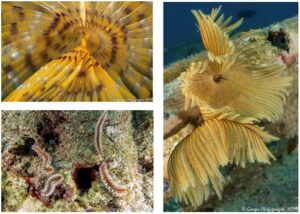
Polychaetes is one of the most abundant and diverse taxon in the marine benthos, used thus as indicators in ecological studies and as a representative of the whole benthic community. During this blended course, a combination of lectures and microscope sessions will provide trainees with a general theoretical framework as well as with practical experience. Participants will be guided by expert taxonomists into the examination and identification of fresh collections from different Israeli marine habitats to the lowest taxonomical level possible. The course will be focused on specific families of the largest class of annelids which have been selected based on their ecological relevance.
More specifically the aims of the course are:
- Introduction to collection, identification, and preserving methodology of the most common polychaetes in different sandy and rocky sediments, in the Mediterranean coast of Israel
- General aspects of biological and ecological characteristics of the taxon
- Collection methodology
- Basic taxonomic description and publication
- Museum standards for long-term care of wet-preserved biological specimens
This blended course will start with lectures during an online session of 5 hours just before the face to face course at 11-16 of June 2023.
The face to face course will last 6 days, with a total of 45 hours, including collection of specimens in the field, lectures and lab work. The main focus will be on basic systematics & ecology with a minor emphasis on collection methodology.
Daily activities will include 3 to 4 lectures, and laboratory practice. One field trip will be arranged to visit a rocky and a sandy beach near Tel Aviv to collect specimens for identification. Snorkelling will be part of the field work but not SCUBA.
Lab work will include sorting, observing, photographing and identifying both preserved materials that was collected prior of the course, as well as live materials collected by the trainees. Below is the daily program of the face to face sessions:
11.6.23 – Introductory and methodology lectures
12.6.23 – Field work and lab
13.6.23 – Lectures and lab
14.6.23 – Lectures and lab
15.6.23 – Lectures and lab
16.6.23 – Final Exam
Trainers
Dr Liron Goren (SMNH-TAU, Israel), Dr Giorgos Chatzigeorgiou (HCMR, Greece)
Dates of Training period – Duration
Online session: 5 hours just before the face to face course
Face to face course: 11-16 of June 2023, 45 hours in total
Location
Tel Aviv, Israel
Course’s language
English
Target audience
Under Graduate, Graduate, Master and PhD Students, Post-Docs, Collections staff with background in Invertebrates Zoology and/or Marine Biology/Ecology, anyone interested in the topic.
Fee
245€, including Tuition fee, Coffee & Refreshments, Field trip
Payment of fees
Registration is free.
Only the trainees who will be selected to participate in the course will be requested to pay the fees. This will happen after the registration deadline.
Registration has closed on 31 March 2023
Mode of trainees’ assessment
Final Exam
Participant quota (min and max number of trainees)
Min 7 – Max 16 trainees
Types of training/ Implementation method
- Theoretical modules
- Field – Lab work
Training Course learning outcomes
- Basic sampling methods
- Procedure of handling and preserving samples
- Taxonomical features of the most abundant Israeli polycheates families
- Identification of the most abundant Israeli polycheates to the lowest taxonomical level possible
- Ecological background of the most abundant Polychaeta families in Israel
Certifications provided
- Certificate of Attendance by CETAF DEST with 5 ECVET Units (European Credit system for Vocational Education and Training)
- Certificate by CETAF DEST according to Europass Certificate Supplement (certifying analytically the knowledge, skills and competences gained)
- ECTS Credits for students from the Tel Aviv University.
What trainees need to bring
- Snorkel equipment (mask, snorkel, fins, swimsuit, sunscreen, hat, UV protection, sleeves)
- Laptop recommended
More details: dest@cetaf.org