Description
While new species are discovered and described each year, global biodiversity loss is increasing at an accelerated rate due to human-driven environmental change. Training the new generation of taxonomists and transmit knowledge on taxonomic expertise and collection management is essential to assess the impact of our activities on species inhabiting the planet.
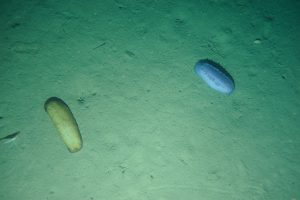
The Tropical Deep-Sea Benthos (TDSB) expeditions have resulted in an exceptional collection of approximately 1,600 specimens of bathyal Holothuroidea (Echinodermata). Preliminary sequencing work (COI barcoding) has been carried out on a selection of specimens, yielding approximately 650 usable sequences grouped into 135 MOTUs (Molecular Operational Taxonomic Units), with a large proportion representing new potential species. This collection represents a unique opportunity to describe the still largely unknown diversity of the Southwest Pacific region for this major group within the deep-sea.
The goal of this cross-disciplinary workshop is to bring together professional taxonomists, researchers, collection managers, and students to speed up the digitization of natural collections of deep-sea holothurians from the SW Pacific region. During the workshop, students will study a wide variety of holothurians from the 7 recognized orders (Apodida, Dendrochirotida, Elasipodida, Holothuriida, Molpadida, Persiculida, and Synallactida).
Over 10 days, they will sort specimens to the lowest taxonomic level possible under expert taxonomic guidance, learn to identify key morphological characters of Holothuroidea (including spicules), and learn best practices for data collection, management, preservation, and traceability. In addition, classes will be given in the mornings on Holothuroidea taxonomy, evolutionary & population genetics, and deep-sea ecology. Finally, students will gain insight into how natural history collections can be used for innovative research projects, including retrospective studies of plastic pollution throughout the past and of animal-associated digestive microbiomes in non-model organisms.
Trainers
Pierre METHOU (Course leader), UMR ISYEB, MNHN, Paris, France
ORCID ID: 0000-0001-5454-1775
Deep-sea ecology, bacterial symbioses & microbiome, integrative taxonomy,
Magalie CASTELIN (Trainer), UMR ISYEB, MNHN, Paris, France
ORCID ID: 0000-0002-9984-2122
Deep-sea benthic systematic, ecology, and evolution
Gustav PAULAY, Florida Museum of National History, US.
ORCID ID: 0000-0003-4118-9797
Biogeography, Evolution, Systematics of Holothuroidea
Akito OGAWA, Tokyo National Museum of Nature and Science, Japan.
ORCID ID: 0000-0001-8843-8282
Taxonomy & Systematics of Holothuroidea, Population Genomics
Fransisco Solis-Marin (Instituto de Ciencias del Mar y Limnología UNAM. Mexico)
ORCID ID: 0000-0001-5729-3316
Sarah Samadi, UMR ISYEB, MNHN, France.
ORCID ID: 0000-0003-0725-9368
Deep-sea benthic ecology and evolution
Claire LAGUIONIE, CNAM-Intechmer, France
ORCID ID: 0000-0003-2198-8364
Deep-sea benthic taxonomy and ecology, natural history collection valorisation
Nicolas PUILLANDRE, UMR ISYEB, MNHN, France.
ORCID ID: 0000-0002-9797-0892
Claudia Ratti, UMR ISYEB, MNHN, France
ORCID ID: 0009-0004-1741-4688
Research engineer and collection manager
Cyril CHAMBARD (MNHN, DGDC)
Collection manager, Marine invertebrates
Priscillia BOURGUIGNON (MNHN, DGDC)
Collection manager, Marine invertebrates
Léa DESCLOS (MNHN, DGDC)
Collection manager, Marine invertebrates
Nathan HIEU (MNHN, DGDC)
Collection manager, Marine invertebrates
Dates of Training period
June 8th-19th, 2026
Duration
10 days, 7 hours per day
Location
Jardin des Plantes
Muséum National d’Histoire Naturelle
43/55 rue Buffon, 75005 Paris
France
Course’s language
English
Target audience
Graduate, PhD students, all persons working on marine biodiversity (preferably on Echinodermata with prior knowledge of anatomy, zoology, or ROV image/video analysis.
Fee
Free (the workshop is free. Travel, accommodations and meals are at the charge of the trainees)
Registration deadline
30 April 2026
Mode of trainees’ assessment
The presence at the courses validates the ECTS.
Participant quota (min and max number of trainees)
Min: 3
Max: 8
External funding/sponsoring
None
Types of training/ Implementation method
- Theoretical seminars/lectures
- Practical experience
Training Course learning outcomes
1. Apply morphological and molecular approaches to holothuroid systematics and taxonomy.
2. Handle, prepare, and curate collection specimens according to professional standards.
3. Document and digitize specimens for biodiversity databases.
4. Understand the ecological context of deep benthic habitats in the New Caledonian EEZ.
5. Implement best practices in collection data management and traceability (FAIR principles, Minimum Information Standards).
6. In-depth understanding of deep-sea Holothuroidea morphology, taxonomy, ecology, and phylogeny.
7. Overview of the functioning of digestive microbiomes in Holothuroidea and the impact of microplastic pollution.
8. Apply morphological and molecular approaches to holothuroid systematics and taxonomy.
9. Handle, prepare, and curate collection specimens according to professional standards.
10. Document and digitize specimens for biodiversity databases.
Certifications provided
The course corresponds to 7.5 ECTS
What trainees need to bring
- Lab Coat
- A dissection kit containing metal inox tools: 1 scalpel, 3 tweezers of different sizes (large, medium, precision), 1 pairs of scissors. See for example: https://www.deltamicroscopies.com/en/products/dissection-kit-12-pro-stainless-steel-instruments-academics-students/
- Pencil, notebook.
- Students can bring their laptop if they wish to use it during the practical work.
Registration
Registration is free but required. To register, please send an email to: pierre.methou@mnhn.fr
Applicants should include a short CV and a letter of motivation describing their background and explaining how participation in this workshop will specifically enhance their career.