Description
Training future taxonomists while making natural science data available are key elements to enhance scientific research on biodiversity. The goal of this innovative cross-disciplinary workshop is to bring together professional taxonomists, researchers, collection managers, and students to speed up the digitization of natural collections while transmitting knowledge on taxonomic expertise and collection management.
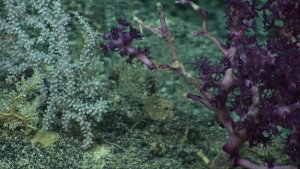
During the workshop we will work on targeted groups of deep-sea benthic cnidarians, such as octocorals, stylasterids, and solitary hexacorals, collected in New Caledonia through the Tropical Deep-sea Benthos expeditions and deposited in the MNHN collections of Paris.
During 5 days, we will sort specimens to the lowest taxonomic level possible and use best practices to data collection management, preservation, and traceability. In addition, there will be courses on cnidarian taxonomy, evolutionary genetics, and deep-sea ecology.
The objectives are to inspire students’ enthusiasm for taxonomic expertise, facilitate the transmission of knowledge in taxonomy, and enhance the global visibility of the collections by digitizing them into the public databases of the MNHN.
The workshop will take place at the Natural History Museum of Paris for 5 and will be organized as follows: in the morning, classes will be given by taxonomists, researchers and collections managers. In the afternoon, students will help taxonomists to sort and identify specimens. Techniques for preparing specimens for their scientific study (e.g. preparing slides, taking photos, and collating the metadata necessary for digitization) will also be discussed throughout the week. The course is in English.
Trainers
Magalie Castelin, UMR ISYEB, MNHN, France
ORCID ID: 0000-0002-9984-2122
Deep-sea benthic ecology and evolution
Eric Pante, UMR LEMAR, Brest, France
https://www.researchgate.net/profile/Eric-Pante
ORCID ID: 0000-0001-7680-2112
Deep-sea benthic ecology and evolution
Taxa: Octocorallia Calcaxonia
Yehuda Benayahu, Tel Aviv University, Israel
ORCID ID: 0000-0002-6999-0239
Taxa: Octocorallia Alcyonacea
Daniela Pica, CoNISMa, Stazione Zoologica Anton Dohrn Napoli, Università Politecnica delle Marche, Italy
ORCID ID: 0000-0001-7823-0488
Deep-sea benthic ecology and evolution
Taxa: Hydrozoa Stylasteridae
Sarah Samadi, UMR ISYEB, MNHN, France
ORCID ID: 0000-0003-0725-9368
Deep-sea benthic ecology and evolution
Didier Aurelle, Aix-Marseille University, France.
ORCID ID : 0000-0002-3922-7291
Octocoral population genetics
Claudia Ratti, UMR ISYEB, MNHN, France
ORCID ID: 0000-0002-8335-567X
Research engineer and collection manager
Cyril Chambard, DGDC, MNHN
Collection manager
Alex David ROGERS, Oxford University, GB
https://www.biology.ox.ac.uk/people/professor-alex-david-rogers
Deep-sea ecology and the Ocean Census Network
Dates of Training period
August 28th, September 1st, 2023
Duration
5 days, 8 hours per day
Location
Jardin des Plantes
Muséum National d’Histoire Naturelle
43 rue Buffon, 75005 Paris
France
Course’s language
English
Target audience
PhD students, MSc students, researchers, technicians, curators and professionals in the field of marine biology.
Fee
Free (the workshop is free. Travel, accommodations and meals are at the charge of the trainees)
Registration deadline
August 25th 2023
Mode of trainees’ assessment
Τhe presence at the courses should validates ECTS (7.5) but this still need to be confirmed.
Participant quota (min and max number of trainees)
Min: n.a.
Max: 15
External funding/sponsoring
None
Types of training/ Implementation method
- Theoretical seminars/lectures
- Practical experience
Training Course learning outcomes
- In-depth exploration of cnidarian morphology, taxonomy, ecology, and genetics
- Hands-on training in species identification techniques and taxonomic key usage
- Examination of the latest research and advancements in cnidarian taxonomy and deep-sea benthic ecology
- Interactive discussions and case studies led by experienced taxonomists and collection managers
- Practical courses: From raw specimen collection to digitization of taxonomically identified specimen
- A brief introduction to species delimitation and molecular taxonomy
Certifications provided
The course corresponds to 7.5 ECTS
What trainees need to bring
- A dissection kit containing metal inox tools: 1 scalpel, 3 tweezers of different sizes (large, medium, precision), 1 pairs of scissors. See for example: https://www.deltamicroscopies.com/en/products/dissection-kit-12-pro-stainless-steel-instruments-academics-students/
- Pencil, notebook.
- Students can bring their laptop if they wish to use it during the practical work.
Registration
For registration, please contact
Magalie CASTELIN
magalie.castelin(at)mnhn.fr